


jillia game | Exploring the Diverse World of Simulation Games: A Deep Dive into Jillia Game and Beyond
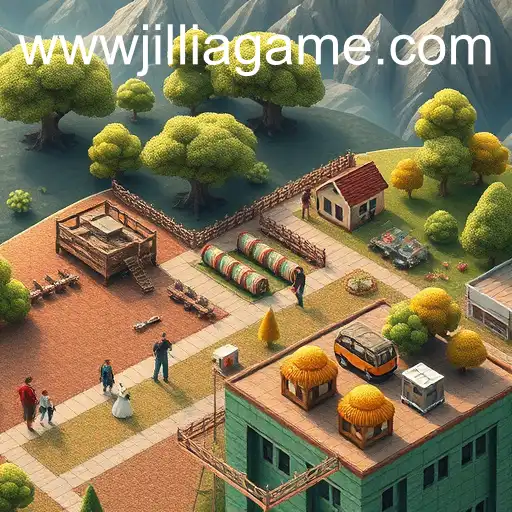
Simulation games have carved out a significant niche in the gaming industry, captivating players with experiences that mimic real-world activities or venture into imaginative landscapes. These games range from building entire cities, managing virtual lives, to piloting planes or even farming. Among the myriad titles in this category, Jillia Game stands out as an intriguing example, showcasing the diversity and innovation that defines simulation gaming.
Jillia Game offers players a unique blend of realism and creativity, inviting them to engage in activities that span various domains. Whether it’s navigating the intricacies of urban planning, engaging in complex trade simulations, or exploring intricate ecological systems, Jillia Game challenges its players to strategize and adapt to evolve their virtual world continuously.
One of the defining features of simulation games is their ability to offer players a sandbox environment, a setting where creativity and strategy take precedence over linear game progression. Jillia Game exemplifies this by providing players with an open-ended platform where choices impact the game’s development, fostering a sense of ownership and immersion.
The educational potential of simulation games is another compelling aspect that cannot be overlooked. By simulating real-world processes and problems, games like Jillia Game can serve as powerful learning tools. They offer insights into complex systems and enable players to experiment with different strategies and outcomes without real-world consequences. This experiential learning aspect is what makes simulation games not only entertaining but also enriching.
Moreover, the social aspect of simulation games increasingly draws players who enjoy collaboration and competition. Multiplayer modes in these games facilitate community building and offer a dynamic interplay between cooperative and competitive gameplay, enhancing the overall experience. Jillia Game, with its robust multiplayer features, encourages players to interact, collaborate, and compete in shared environments, thereby enhancing social connectivity.
In conclusion, simulation games have not only expanded our understanding of what games can achieve but also redefined the boundaries of interactive entertainment. They combine education with entertainment, challenge with relaxation, and solitude with social interaction. As Jillia Game continues to intrigue and inspire, it symbolizes the potential of simulation games to transform how we perceive both virtual and real-world scenarios. With the growing advancement in technology, the future of simulation games promises even more immersive and realistic experiences, beckoning both seasoned gamers and new enthusiasts to explore its possibilities.
